
Museu Marítimo de Ílhavo
Português
Bem-vindo ao Museu Marítimo de Ílhavo. Fundado a oito de agosto de mil novecentos e trinta e sete, este museu nasceu do esforço de um grupo de ilhavenses dedicados a preservar a memória e a cultura do mar.
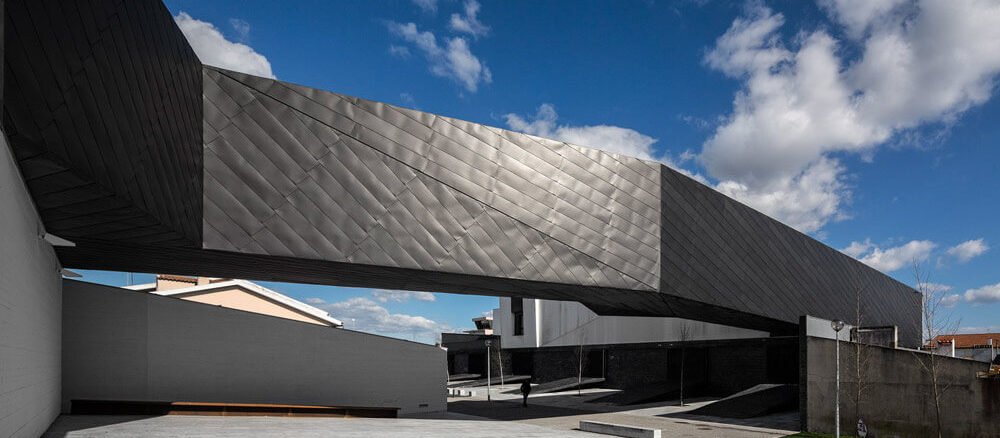
Em dois mil e um, o Museu ganhou um novo edifício de arquitetura moderna e passou a integrar o navio-museu Santo André, um antigo arrastão bacalhoeiro que testemunha o duro trabalho da pesca do bacalhau.
O Museu continuou a crescer: em dois mil e doze foi criado o centro de investigação CIEMar-Ílhavo, em dois mil e treze inaugurou-se o Aquário de Bacalhaus, e em dois mil e vinte e um abriu o Centro de Religiosidade Marítima, dedicado ao património espiritual ligado ao mar.
Hoje, o Museu Marítimo de Ílhavo celebra a forte ligação dos ilhavenses ao oceano e à Ria de Aveiro. As suas exposições permanentes lembram a pesca do bacalhau na Terra Nova e na Gronelândia, as fainas da Ria e a diáspora marítima portuguesa, convidando cada visitante a descobrir um passado recente que continua vivo nesta comunidade.
Español
Bienvenidos al Museo Marítimo de Ílhavo. Fundado el ocho de agosto de mil novecientos treinta y siete, este museo nació del esfuerzo de un grupo de habitantes de Ílhavo dedicados a preservar la memoria y la cultura del mar.
En dos mil uno, el Museo ganó un nuevo edificio de arquitectura moderna y pasó a integrar el barco-museo Santo André, un antiguo arrastrero bacaladero que testimonia el duro trabajo de la pesca del bacalao.
El Museo siguió creciendo: en dos mil doce se creó el centro de investigación CIEMar-Ílhavo, en dos mil trece se inauguró el Acuario de Bacalaos, y en dos mil veintiuno abrió el Centro de Religiosidad Marítima, dedicado al patrimonio espiritual ligado al mar.
Hoy, el Museo Marítimo de Ílhavo celebra la fuerte relación de los habitantes de Ílhavo con el océano y la Ría de Aveiro. Sus exposiciones permanentes recuerdan la pesca del bacalao en Terranova y Groenlandia, los trabajos en la Ría y la diáspora marítima portuguesa, invitando a cada visitante a descubrir un pasado reciente que sigue vivo en esta comunidad.
English
Welcome to the Ílhavo Maritime Museum. Founded on the eighth of August, nineteen thirty-seven, this museum was born from the dedication of a group of locals committed to preserving the memory and culture of the sea.
In two thousand and one, the Museum moved into a new modern building and incorporated the museum-ship Santo André, a former cod-fishing trawler that bears witness to the demanding work of cod fishing.
The Museum continued to grow: in two thousand and twelve the CIEMar-Ílhavo research center was created; in two thousand and thirteen the Codfish Aquarium opened; and in two thousand and twenty-one the Center for Maritime Religiosity was inaugurated, showcasing the spiritual heritage connected to the sea.
Today, the Ílhavo Maritime Museum celebrates the deep bond between the people of Ílhavo, the ocean, and the Aveiro Lagoon. Its permanent exhibitions highlight cod fishing in Newfoundland and Greenland, the lagoon's traditional work, and the Portuguese maritime diaspora, inviting each visitor to rediscover a recent past that remains alive in this community.
Français
Bienvenue au Musée Maritime d’Ílhavo. Fondé le huit août mil neuf cent trente-sept, ce musée est né de la volonté d’un groupe d’habitants d’Ílhavo désireux de préserver la mémoire et la culture de la mer.
En deux mille un, le Musée s’est installé dans un nouveau bâtiment d’architecture moderne et a intégré le navire-musée Santo André, un ancien chalutier morutier qui témoigne du dur travail de la pêche à la morue.
Le Musée a continué de se développer : en deux mille douze a été créé le centre de recherche CIEMar-Ílhavo ; en deux mille treize a ouvert l’Aquarium de Morues ; et en deux mille vingt-et-un a été inauguré le Centre de Religiosité Maritime, dédié au patrimoine spirituel lié à la mer.
Aujourd’hui, le Musée Maritime d’Ílhavo célèbre le lien profond qui unit les habitants d’Ílhavo à l’océan et à la Ria d’Aveiro. Ses expositions permanentes évoquent la pêche à la morue à Terre-Neuve et au Groenland, les travaux traditionnels de la lagune et la diaspora maritime portugaise, invitant chaque visiteur à redécouvrir un passé récent toujours vivant dans cette communauté.